
DRC Govt Crackdown on Mining Tax Evasion Delivers Unprecedented Results
DRC Mining Tax Reform Drives Revenues Up Nearly 2,000% After Ending Fuel Subsidies
The reforms launched by the Congolese government to curb tax evasion in the mining industry are now delivering clear, measurable results.
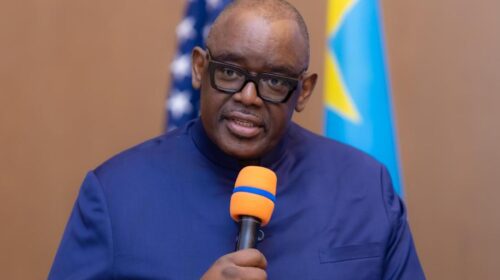
According to data presented by Deputy Prime Minister and Minister of the National Economy, Daniel Mukoko Samba, during his address to the Senate on November 4, 2025, public revenues from petroleum products supplied to mining companies have surged dramatically following the enforcement of new regulations in August 2025.
Until July 2025, the duties owed by mining operators on petroleum products remained below 5 billion Congolese francs (CDF) per month, fluctuating between 3.9 and 4.8 billion CDF.
However, after the implementation of the interministerial decree jointly signed by the Ministers of Finance, Hydrocarbons, and the National Economy, the Directorate General of Customs and Excise (DGDA) recorded 63.6 billion CDF in August and 93.7 billion CDF in September.
This reform, aligned with the 2025 Finance Law, ends mining companies’ access to fuel subsidies. From now on, they must purchase petroleum products “under customs control” from authorized suppliers and pay the full amount of duties and taxes owed.
The goal is to ensure full traceability of petroleum flows and enable the State to recover revenues that previously escaped the public treasury.
“Where we used to earn less than 5 billion CDF per month, we now collect nearly 100 billion,” highlighted Daniel Mukoko Samba.
This sharp rise in revenue comes at a time when concerns remain about the appreciation of the Congolese franc and potential pressure on public finances.
The strong performance in the mining and oil sector may therefore strengthen the government’s budgetary position and provide additional room for maneuver to support macroeconomic stability.
By boosting revenue from a single tax segment, this reform demonstrates the concrete impact of transparency and streamlining measures in natural resource management. It also sends a clear signal of the government’s commitment to strengthening domestic revenue mobilization and reducing tax losses in a sector that remains essential to the Congolese economy.